Local teacher inspires students to give the gift of life through blood donations

By Kathryn Dean, American Red Cross volunteer

It’s already nearing mid-December and with the holiday season in full swing, the spirit of giving is on many of our hearts and minds. As we grow older, we learn to appreciate the fulfillment that giving to others brings. This year, as we consider ways to give back, either through gifts, service, or charity, let’s remember one other significant way that we can help – by giving the gift of life through blood donations.

Merrylou Windhorst and St. Vincent – St. Mary High school teacher Heidi Tripp

Merrylou Windhorst knows the importance of giving back to the community. She has been doing it throughout her almost 80 years of life (she’ll reach her milestone birthday on Christmas day this year).As a teacher at St. Vincent – St. Mary High School (St. V’s) in Akron and now as a volunteer for the last 50 years, Merrylou has been mentoring students and organizing blood drives through the American Red Cross, giving back to the community that she loves.

Merrylou started out as a student at Our Lady of Elms Catholic school. After graduation, she stayed on as religious sister at the Elms for 11 years before feeling called to do something else. That something else was to become a mother and a teacher, and thus starting her work at St. V’s. During her tenure, she worked as a health and physical education teacher, as well as teaching theology and coaching softball.

Her interest in health and well-being led her to start a program at St. V’s about 40 years ago that she still leads and is still going strong today, the Future Medics program. Recently she has expanded the program to include students from her alma mater, Our Lady of the Elms. In it, students who have an interest in the medical field meet up once a month and learn about career options and hear from alumni who have found success in medicine. Students also help to run three blood drives per school year, something that she brought to the school over 20 years ago.

“As a teacher I’ve always said ‘don’t just think of yourself as a ME, turn the M upside down and it becomes a W, becomes WE’… and that’s kind of what I have done as a teacher and especially at Future Medics and at blood drives. It’s time to give to other people.”

High school students who are 16, with a parent’s permission, can donate blood. Students can also volunteer to work at the blood drives. Either way, they earn service hours for graduation, an important part of the culture at St. V’s. Merrylou is so proud of her students and their willingness to go above and beyond for their community.

“I’m always honored and amazed at these young people at age 16, and it’s gotta be scary to roll up their sleeve and give blood.”

She said with the students help, they often make or exceed their donation goals. Their next blood drive is scheduled for Jan. 22 at the school and is open to the public.

“You think about, when can you save a life? How can we ever in our life, other when you stop and give CPR to somebody on the side of the road, who can say, ‘I’ve saved lives?’”

Recently Merrylou received recognition from the Red Cross for her over 20 years of service in organizing blood drives.

If you’re considering donating and giving the gift of life this holiday season, join us at the annual holiday blood drive at the Sheraton Suites in Cuyahoga Falls on Dec. 17 from 7am-7pm. There will be refreshments and raffles all day, and all donors will receive a free, long-sleeved Red Cross T-shirt!

Edited by Glenda Bogar, Red Cross volunteer

Posted by Ryan Lang, Red Cross board member and volunteer

Recognizing blood donors on World Blood Donor Day

Increased need for donors during summer months

By Eilene E. Guy, American Red Cross volunteer

Why in the world would anybody willingly roll up a sleeve and take a needle jab, to give up a bag of precious blood?

“My mother, she gave I don’t know how many gallons,” one donor recently told me. This middle-aged daughter was honoring her late mother’s example of generosity.

Eilene E. Guy, Red Cross volunteer and blood donor

“Back in 1970, a friend of mine was going to have surgery, so I went to Cleveland to donate for him,” another donor recalled. With his donation the day we talked, that man was approaching his 35-gallon mark!

On this, World Blood Donor Day, the American Red Cross salutes the estimated 6.8 million people in the U.S. who donate blood. That yields about 13.6 million units (a “unit” of blood is about one pint) of whole blood and red blood cells a year.

That’s a whole lot of blood!

But consider: Every two seconds, someone in the U.S. needs blood or platelets. That amounts to some 29,000 units of red blood cells every day.

And this isn’t an option. Blood is saving the lives of critically injured emergency room patients, mothers and newborns experiencing complications of childbirth and folks having surgery. It’s sustaining hundreds of thousands of people undergoing chemotherapy treatment for cancer and tens of thousands who rely on blood transfusions to cope with the effects of sickle cell disease.

We’re fortunate to live in an age of modern medicine, but one challenge remains: There’s no way to “manufacture” blood.

So until that magic day, it’s a measure of our humanity that so many donors step forward to save the lives of others – in most cases, people they’ll never know.

The fact is, only about 3% of age-eligible people donate blood every year. That often leaves the supply agonizingly short. Over the last month, for example, the Red Cross collected about 20,000 fewer units of blood than needed to maintain a safe and stable national blood supply.

That’s worrisome, because blood donations typically drop during the summer months. At the same time, the need doesn’t stop.

Which brings us back to the source, blood donors.

I know from personal experience that it takes about an hour to go through the whole process: Screening to be sure I’m healthy and don’t have any disqualifications (The U.S. Food and Drug Administration decides what that would be, such as exposure to communicable diseases like malaria, or recent tattoos or piercings.); donating; and recovery (Water, juice and snacks are encouraged to jump-start the body’s replacement of the blood removed.)

You don’t need to know your blood type to make a blood donation. And if you think you’ve been disqualified, give it another try: You, or the rules, may have changed.

You can schedule your blood donation by using the free Blood Donor App, by visiting RedCrossBlood.org or by calling 1-800-RED CROSS (1-800-733-2767). 

On this World Blood Donor Day and every day, “bravo” to those who make the choice to save or sustain a life.

Edited by Glenda Bogar, Red Cross volunteer

Posted by Ryan Lang, Red Cross board member and volunteer
Local man donates blood for the first time in decades after LGBTQ+ restrictions lifted

By Kathryn Dean

Important changes to the U.S. Food and Drug Administration (FDA) guidelines regarding blood donations mean more LGBTQ+ community members are now eligible to donate blood.

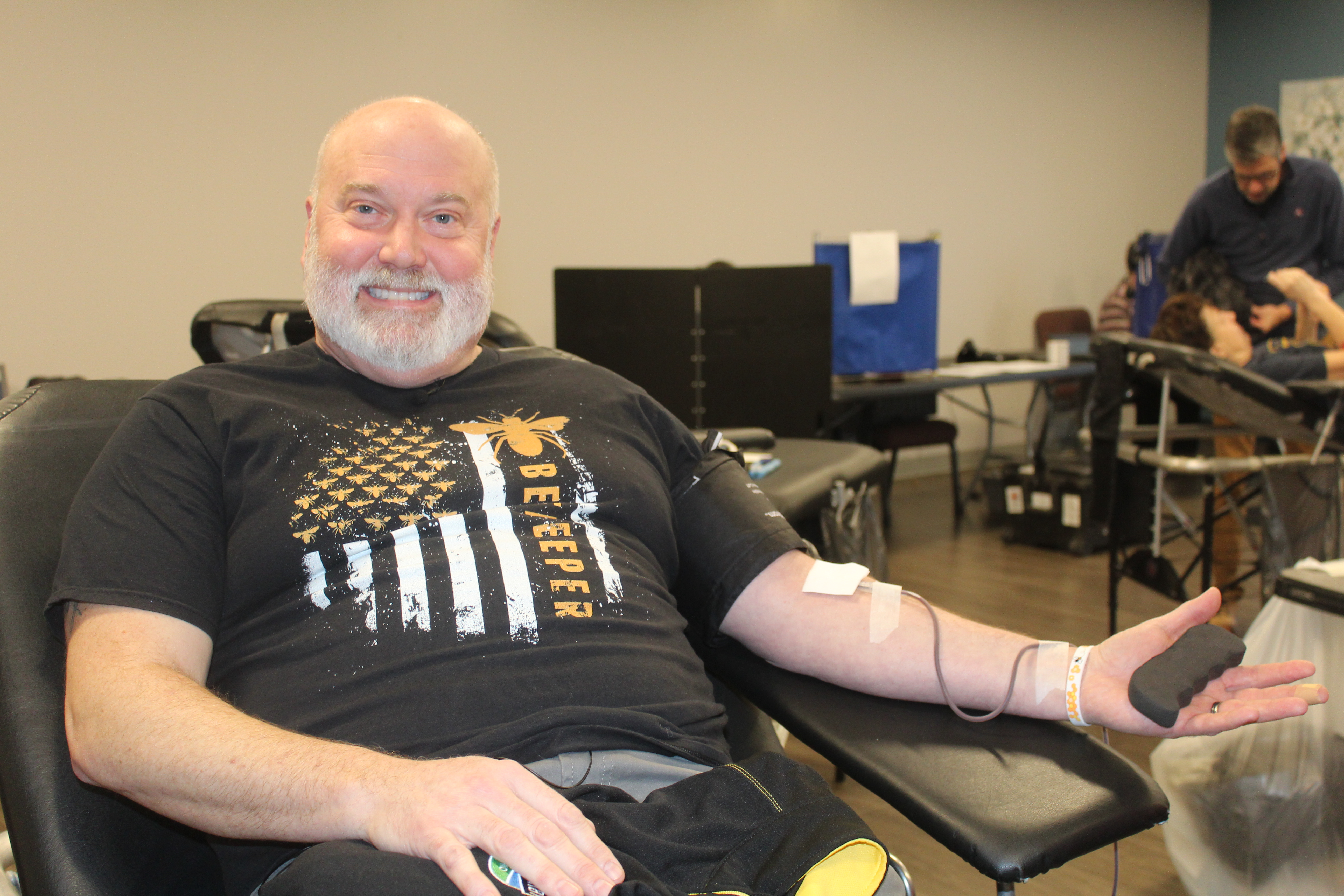
Mark Fleischer, Blood Donor

This was great news for a local Northern Ohio man and former American Red Cross employee Mark Fleischer, who donated blood last week for the first time in over three decades. For eight years, Mark worked at the Red Cross, organizing and running blood drives. He currently does the same at the Willoughby Senior Center, and so is very familiar with the eligibility rules regarding blood donations.

Under the new guidelines adopted by the Red Cross on Aug. 7 of last year, donors are now asked a standardized set of eligibility questions, regardless of sexual orientation, sex, or gender. In addition, deferrals that previously restricted gay and bisexual men from donating have now been lifted and eligibility is decided on a case-by-case basis.

As a gay man, Mark was previously restricted from donating due to rules in place since the 1980’s, aimed at preventing the spread of HIV. Risks associated with HIV are now addressed in the new, standardized questionnaire and are based on individual behaviors and health histories.

Mark said that he was pleasantly surprised to hear of the changes late last year and was eager to donate and support the cause that he holds so dear to his heart. He encourages those who have previously been given deferrals in the past to check with the Red Cross website for updated information on eligibility.

“People who may think that they’re not able to donate because of maybe a drug they are taking or because of a travel restriction . . . times have changed so I would encourage everybody to take a look because you never know. That was exactly the case for me,” Mark said.

He also wants people to know the benefits of donating blood, especially since an emergency blood shortage was declared by the Red Cross last week.

Mark Fleischer, Blood Donor

“By taking those few moments and donating, you really could be touching the lives of somebody that maybe you don’t know, but it’s a gift that you can give through that donation. It doesn’t take a lot of time and it’s really, really, rewarding. I’m really excited about it,” Mark said. “That’s what I want to encourage people to do and not just gay men, but everybody. Whatever your sexuality is, whatever your gender, whatever your race. Roll your sleeve up, come on out, and help give the gift of life. I can’t encourage people enough to do that.”

Those who would like more information on this topic are encouraged to visit the Red Cross LGBTQ+ Donors page for detailed guidance and answers to many common questions.

For more information on donating, visit the Red Cross Give Blood page. During the month of January, all donors will be automatically entered to win a trip for two to Super Bowl LVIII in Las Vegas.

Edited by Glenda Bogar, Red Cross volunteer

Posted by Ryan Lang, Red Cross board member and volunteer