As temperatures drop, heat your home safely

By Tim Poe, American Red Cross volunteer

I arrived home after jogging through a cool drizzle in fading gray light and heard the furnace’s low hum, recently woken from summer slumber. That sound will be a familiar undertone over the next few months, so I remembered to double check the filters and vents and schedule maintenance. As an American Red Cross volunteer, I have seen that forgetting these tasks can have tragic results, especially when space heaters are used, as they are involved in most fatal home heating fires.

As temperatures drop, the risk of home fires increases. Home fires account for most disasters to which the Red Cross responds, especially in Northern Ohio, and responses increase 30% during cold months. In 2022, for instance, the Northern Ohio Red Cross responded to 345 home fires in the last three months of the year, compared to 249 from July through September. And in just the first 15 days of October 2023, Northern Ohio Red Cross teams responded to 33 events, all home fires, and assisted 115 people.

To help keep you and your loved ones safe, here are a few home heating safety tips:

  • Have at least three feet of space between heating equipment and children, pets and anything that can burn. Most home heating fire tragedies occur when flammable items like furniture, rugs, bedding, and drapes are too close.
  • If you must use a space heater, never leave it unattended. Place it on a level, hard and nonflammable surface, such as a ceramic tile floor. Again, keep it away from anything flammable.
  • Look for models that automatically shut off if the heater falls over.
  • Plug space heaters directly into outlets, never into an extension cord, and turn it off when you leave the room or go to sleep.
  • Never use a cooking range or oven to heat your home.
  • Never leave a fire burning in the fireplace unattended. Make sure any embers are extinguished before going to bed or leaving home. Use a glass or metal fire screen to keep embers in the fireplace.
  • Have furnaces, chimneys, fireplaces, wood, and coal stoves inspected annually by a professional and cleaned if necessary.

Additional information and tips are available at redcross.org/fire, including an escape plan. You can also download free apps at redcross.org/apps.

Red Cross efforts to help prevent home fires and save lives when they occur have had tremendous success. The Home Fire Campaign—including Sound the Alarm, which originated in Northern Ohio—is credited for saving at least 1,969 lives since October 2014, 22 of them in Northern Ohio.

If you would like to request a smoke alarm or read more information about the Home Fire campaign, please click here.

Edited by Glenda Bogar, Red Cross volunteer

Posted by Ryan Lang, Red Cross volunteer and board member

Protecting what matters most in Northern Ohio

October 8 – 14 is National Fire Prevention Week

By Doug Bardwell, American Red Cross volunteer

Unless you live near a fire station, you might be surprised by how many fires occur in
Northern Ohio. Where we live in Strongsville, you can usually detect that single
siren driving down Royalton Road as an EMS ambulance. But, if you hear multiple
sirens and the sound of large diesel engines, you know the entire squad is responding
to yet another fire – and they are usually home fires.

The Red Cross works with local fire departments to help prevent home fires

The most common home fires are caused by cooking. Every year, firefighters respond
to more than 170,000 kitchen fires, causing hundreds of deaths, thousands of injuries
and more than $1 billion in damages each year.

Since 2015, would you believe the American Red Cross in Northern Ohio has
responded to more than 11,000 home fires, and assisted nearly 17,000 families?
Despite insurance or Red Cross financial assistance, think of the inconvenience of
being displaced for weeks or months before your home is habitable again after a fire.

Damage caused by fire to a home in East Cleveland in 2022

There’s a better way

Following these simple tips, you and your family can help prevent kitchen fires:

  1. Use a timer to remind yourself that the stove or oven is on.
  2. Keep anything that can catch fire — potholders, oven mitts, wooden utensils,
    paper or plastic bags, food packaging, towels or curtains — away from your
    stove, oven or any other appliance in the kitchen that generates heat.
  3. Always check the kitchen before going to bed or leaving the home to make
    sure all stoves, ovens, and small appliances are turned off.
  4. Install a smoke alarm near your kitchen, on each level of your home, near
    sleeping areas, and inside and outside bedrooms if you sleep with doors closed. Use the test button to check it each month. Replace all batteries at least once a year if your smoke alarm requires it.
  5. Tap here for another half dozen sensible tips to avoid kitchen fires.
A Red Cross volunteer installs a smoke alarm in a home in Cleveland, with guidance from a firefighter

Smoke alarms are crucial in saving lives

The Northern Ohio region of Red Cross has been installing free smoke alarms for those who need them since 1992. To date, more than 200,000 alarms have been
installed.

Nationally, the Red Cross and partners, through the Home Fire Campaign, have installed 2.6 million alarms in more than 1.1 million households since 2014.

Do they really make that much difference?

Verifiably – yes, they do. As of August 31, 1,928 lives nationwide were documented as
saved due to work done by the Red Cross and partners through the Home Fire
Campaign.

For five more ways you can help the Red Cross continue this valuable practice in Northern Ohio communities, tap here.

If you’d like trained Red Cross volunteers to offer you valuable home fire safety
information to help YOU prevent a fire in your home – and/or to install smoke alarms in
your home, tap here.

Posted by Ryan Lang, Red Cross board member and volunteer

Thirty years of lifesaving preparedness: Northern Ohio initiative helps Sound the Alarm

By Tim Poe, Red Cross Volunteer

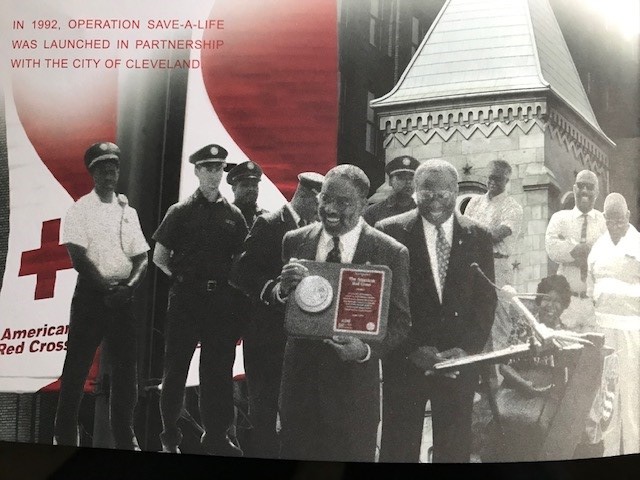
Former Cleveland Mayor Mike White and then CEO of the Greater Cleveland Chapter, Steve D. Bullock

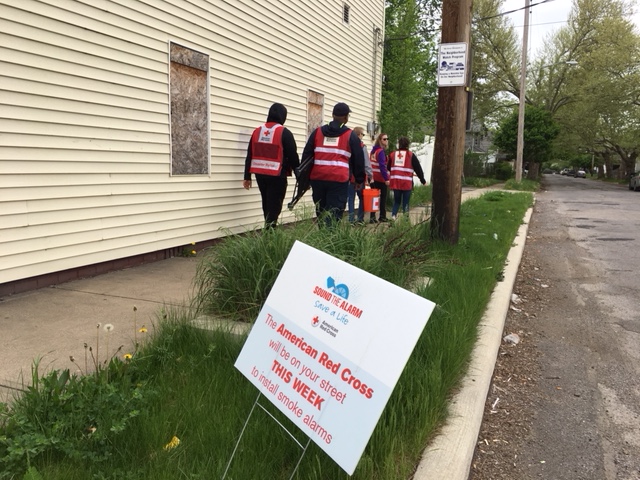
Part of a lifesaving campaign with its roots in Cleveland, 2022’s Sound the Alarm has begun. Over the next few weeks, the American Red Cross, fire departments and other partners will be visiting neighborhoods, with a goal of installing 50,000 smoke alarms, teaching fire safety and helping families develop two-minute escape plans. The smoke alarm installation portion, paused during the pandemic, returns this year.

The idea began in 1992 when 28 Cleveland residents, half of them children, died in home fires. Businessman and philanthropist Sam Miller chose to act. He joined with other civic leaders, the Red Cross and the Cleveland Fire Department to create “Operation Save-A-Life,” installing smoke alarms throughout the city. Thanks to this and other safety initiatives, annual fire fatalities in Cleveland have remained below the 1992 level.

Other regions took note, and the Red Cross’ Home Fire Campaign became national in 2014. Sound the Alarm is part of the effort. Read this article for more on Operation Save-A-Life and Sam Miller, who passed in 2019.

The program has been an astounding success. Since becoming national, Sound the Alarm and the Home Fire Campaign have saved 1,275 lives in the U.S., 402 under the age of 18. That includes 21 in Northern Ohio; 70 statewide. John Gareis, regional manager, Disaster Preparedness, Northern Ohio Region, pointed out that there are countless additional lives saved that we do not even hear about.

It is critical that the campaign continues, as home fires claim seven lives per day, on average, and are the most frequent disaster in the U.S. And sadly, deaths continue, with 45 fire fatalities reported in Ohio so far this year.

Preparation and smoke alarms are effective. When a fire occurs, you have as little as two minutes to escape, so having a plan and a working alarm are critical.

John has been a key part of the campaign since its beginnings in Cleveland, helping it grow into the national effort it is today.

John said, “We are excited to return to in-person smoke-alarm installation this year, along with continuing to provide fire education. Home fires, like other disasters, can happen anywhere, anytime, and Sound the Alarm helps people be ready. So often we see the effects of those who had prepared and those who, unfortunately, did not. Understanding the basics of fire safety, having escape and communication plans, and knowing what to do does save lives. Helping people during disasters is at the heart of the Red Cross mission, and preparation is key.”

Additional volunteers are welcome.

“Sound the Alarm is a meaningful way to be a part of a larger movement while directly helping local families,” said Tim O’Toole, regional disaster officer in Northern Ohio. “In just one day, you could help save a neighbor’s life by installing smoke alarms—which can cut the risk of dying in a home fire by half.”

If you would like to volunteer, donate, request a smoke alarm or receive assistance preparing for a home fire, visit this site.

Edited by Glenda Bogar, Red Cross volunteer

Cleveland State Intern, Mary Malone shares her Red Cross story

As a senior at Cleveland State University pursuing a bachelors of Social Work, I began an internship with the American Red Cross, in the Emergency Services department.

After a fire, the Red Cross assists the family in immediate and urgent needs. As a student intern I am learning how to participate in a social services agency setting by working directly with clients, other caseworkers, volunteers, and various other staff positions. I look to each person at the Red Cross as a “teacher” and someone from whom I can learn valuable lessons and techniques.

A typical day for me at the Red Cross includes following up with clients after they have experienced a disaster. The most prevalent of emergency situations that I have encountered, during my time, are single-family house fires. The caseworkers at the Red Cross and I ensure that the client’s direct needs are being met. If the Red Cross cannot provide it directly, there are countless referrals to other community organizations. I spend a lot of time on the phone talking with clients, sometimes it is a short call and sometimes the client wants to have someone to talk to and express their fears, worries, and sometimes even joys. I use my ability to communicate with others when they have just experienced a crisis, by validating their words and listening to what it is that they are saying. Other times I meet with clients when they need to come in to the Red Cross for a meeting with a caseworker. Being able to help people in such a dire time of need, knowing that I have many tools in my toolbox to assist them and let them know that they are not alone, is so rewarding.

As part of my internship, I have been able to go out and witness the scene of a disaster. I went to a house that had been burnt very badly and the emotions of clients as they were standing outside, were very raw. Having never been in a situation quite like this I was not sure how I would feel, or how I should act. I learned a lot by watching my Red Cross supervisor communicate with empathy, understanding, and patience. Even though her home was very badly damaged, the client was most concerned for her cat’s well-being. As we left various neighbors, family members and friends came to her and lavish her with hugs, and envelopes of money to help financially. Even in a situation that is inconceivably horrible, the strengths within this one client’s community gives me hope of a full recovery and resiliency.

After semesters of studying books and articles, participating in mock interventions, and writing papers in preparation for my future as a Social Work practitioner, my work with the Red Cross has reaffirmed my passion for social work.