Keep your kids safe as they head back to school

It’s getting closer… Yes, it is almost time… Time for the kids to go back to school! And while parents all across Northern Ohio collectively exhale that sigh of relief, knowing that their “break” from the summer mayhem is on the horizon, there are still things to think about. Most notably back to school safety! With that, the American Red Cross offers ways to help keep your students safe as they return to school for the upcoming year.

If your student is younger or going to school for the first time, teach them:

  • Their phone number, address, how to get in touch with their parents at work, how to get in touch with another trusted adult and how to dial 911.
  • Not to talk to strangers or accept rides from someone they don’t know.

If your child walks to school, teach them to:

  • Walk on the sidewalk. If no sidewalk is available, walk facing traffic.
  • Stop and look left, then right and left again to see if cars are coming.
  • Cross the street at the corner, obey traffic signals and stay in the crosswalk.
  • Never run out into the street or cross between parked cars.

If your student takes the bus to school, teach them to:

  • Get to their bus stop early and stand away from the curb while waiting for the bus to arrive.
  • Board the bus only after it has come to a complete stop and the driver or attendant has instructed them to get on. And only board their bus, never an alternate one.
  • Stay in clear view of the bus driver and never walk behind the bus.

If your student rides their bike to school, teach them to:

  • Always wear a helmet.
  • Ride on the right in the same direction as the traffic is going.

If you drive your child to school, make sure to:

  • Always use seat belts. Younger children should use car seats or booster seats until the lap-shoulder belt fits properly (typically for children ages 8-12 and over 4’9”), and ride in the back seat until they are at least 13 years old.

If you have a teenager driving to school, make sure they:

  • Use seat belts.
  • Don’t use their cell phone to text or make calls and avoid eating or drinking while driving.

If you are considering getting your student a cell phone:

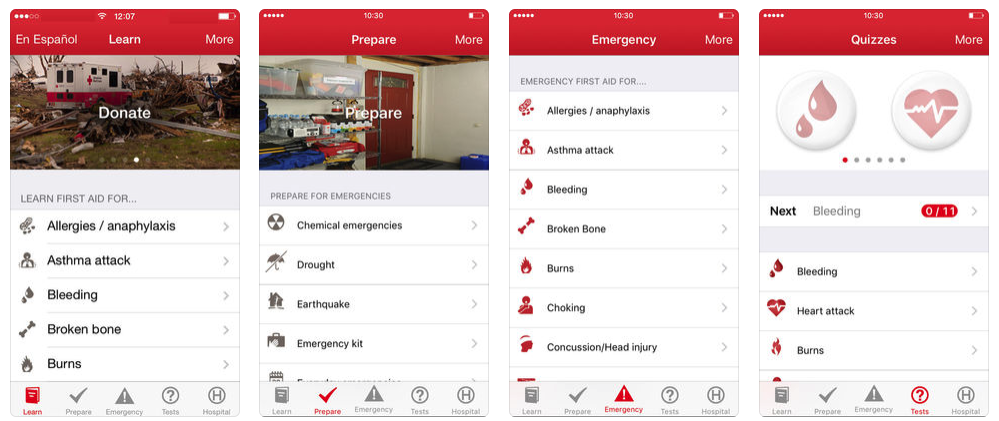
  • Download the free Red Cross First Aid and Emergency apps to give them access to first aid tips for common emergencies and full weather alerts. Find the apps in smartphone app stores by searching for the American Red Cross or going to redcross.org/apps.

DRIVERS, SLOW DOWN! Drivers should slow down as children head back to school. Know that yellow flashing lights indicate a school bus is getting ready to stop ─ motorists should slow down and be prepared to stop. Red flashing lights and an extended stop sign indicate the bus is stopped and children are getting on or off.

Motorists must stop when they are behind a bus, meeting the bus or approaching an intersection where a bus is stopped. Motorists following or traveling alongside a school bus must also stop until the red lights have stopped flashing, the stop arm is withdrawn, and all children have reached safety. This includes two and four-lane highways. If physical barriers such as grassy medians, guide rails or concrete median barriers separate oncoming traffic from the bus, motorists in the opposing lanes may proceed without stopping. Do not proceed until all the children have reached a place of safety.


Tips to stay safe this Labor Day weekend

By Samatha Pudelski, American Red Cross volunteer

Labor Day weekend is here and in Northern Ohio, there is no shortage of activities
to celebrate with friends and family. Whether you are headed to Lake Erie, our local
parks or taking a road trip, the American Red Cross of Northern Ohio wants you to
have a safe, fun holiday weekend. Keep in mind the following tips when you’re out
and about:

Hitting the Road:

Whether you are headed out across town or on a road trip, these simple tips will
help keep you safe.

  1. Don’t drink and drive. Make sure to have a designated driver, use public
    transportation or a ride share service to get around safely.
  2. If you are driving, make sure to get adequate rest to remain alert. Make sure
    to give your full attention to the road and avoid using cell phones while
    driving.
  3. Follow the rules of the road. Use your seat belts, observe speed limits and be
    cautious when driving in inclement weather.
  4. Use caution in work zones.
  5. Keep a safe distance from other vehicles.

Water Activities

If you are planning to hit the beach, spend some time on the lake or river or going to
a water park, here are a few safety tips to maximize your fun in the sun.

  1. If you plan to swim, swim in areas where lifeguards are on duty. Make sure to
    follow all of their instructions.
  2. If you are swimming in an ocean, lake or river, remember that swimming in
    these environments is different than a pool, and require a higher level of
    swimming skill.
  3. Protect your skin in the sun. Make sure to use SPF 30 sunscreen and reply
    every two hours or after swimming. Consider wearing protective clothing
    and a hat.
  4. Adults should keep an eye on kids they are with. If they are less than four feet
    tall or cannot swim, make sure they wear a U.S. Coast Guard approved life
    jacket.
  5. If you are caught in a rip current, try not to panic. Signal to those on shore
    that you need assistance. Swim parallel to the short until you are out of the
    current – do not try to swim against the current. Once you are free, swim
    towards the shore.

Spending Time in the Great Outdoors

  1. Be aware of the level of ability of those in your group when hiking or doing
    other activities. Sprains and falls are some of the most common injuries
    hikers may face.
  2. Make sure to stay well hydrated – plan ahead and bring extra water to drink
    throughout the day.
  3. If you are going to an area where there may not be a good cell signal, share
    your travel plans with a family member or friend.
  4. Pack a first aid kit, insect repellent, sunscreen and any personal medications
    needed.
  5. Take a Red Cross First Aid/CPR course so you are prepared if someone needs
    help.

Finally, did you know that the Red Cross has several free apps to help you and your
loved ones safe? Check out the Red Cross Emergency App, the Red Cross Swim app
and the Red Cross First Aid app to get the vital information you need. Search for the
American Red Cross in your app store or visit redcross.org/apps.

Posted by Ryan Lang, American Red Cross board member and volunteer

Stay Safe This Summer

The Memorial Day holiday weekend is the unofficial start of summer when all of us will be enjoying the outdoors and sunshine. The American Red Cross wants everyone to have fun and offers 20 things you can do to be safe all summer long.

“Summer is finally on the way and many of us will travel, grill delicious food and cool off in the pool or at the beach,” said Mike Parks, Chief Executive Officer for the Red Cross of Northeast Ohio. “We want everyone to enjoy the summer and be safe at the same time, so we are offering these 20 safety tips people should follow.”

DRIVING SAFETY

  1. Be well rested and alert, use seat belts, observe speed limits and follow the rules of the road. Clean your headlights and turn them on as dusk approaches or in inclement weather.
  2. Don’t drink and drive. Have a designated driver available.
  1. Give your full attention to the road. Avoid distractions such as cell phones. 
  2. Use caution in work zones. There are lots of construction projects underway on the highways.
  3. Don’t follow other vehicles too closely.

WATER SAFETY

man wearing blue shorts performing back flip over body of water

Photo by Oliver Sjöström on Pexels.com

  1. Ensure that everyone in the family becomes water competent. That is, learn to swim well, know your limitations and how to recognize and avoid hazards, and understand how to help prevent and respond to emergencies around water.
  2. Adults should actively supervise children and stay within arm’s reach of young children and newer swimmers. Kids should follow the rules.
  3. Fence your pool in with four-sided fencing that is at least four-feet in height and use self-closing, self-latching gates.
  4. Wear your U.S. Coast Guard-approved life jacket always when on a boat and if in a situation beyond your skill level.
  5. Swim as a pair near a lifeguard’s chair everyone, including experienced swimmers, should swim with a buddy in areas protected by lifeguards. If in a location with no lifeguards, such as a residential pool, designate a “Water Watcher” to keep a close eye and constant attention on children in and around the water.

BEACH SAFETY

group of people playing on the beach

Photo by Archie Binamira on Pexels.com

  1. If you plan to swim in the ocean, a lake or river, be aware that swimming in these environments is different than swimming in a pool. Be sure you have the skills for these environments. 
  2. Swim only at a beach with a lifeguard, within the designated swimming area. Obey all instructions and orders from lifeguards and ask them about local conditions.
  3. Make sure you swim sober and that you always swim with a buddy. Know your limitations and make sure you have enough energy to swim back to shore.
  4. Protect your neck – don’t dive headfirst. Walk carefully into open waters. Watch out for and avoid aquatic life.
  5. If you are caught in a rip current, try not to panic. Signal to those on shore that you need assistance. Swim parallel to the shore until you are out of the current. Once you are free, swim toward shore. If you can’t swim to the shore, float or tread water until you are free of the rip current and then head toward shore.

 GRILLING SAFETY

charcoal grill with sausage

Photo by Skitterphoto on Pexels.com

  1. Always supervise a barbecue grill when in use. Don’t add charcoal starter fluid when coals have already been ignited.
  2. Never grill indoors – not in your house, camper, tent or any enclosed area.
  3. Make sure everyone, including pets, stays away from the grill.
  4. Keep the grill out in the open, away from the house, deck, tree branches, or anything that could catch fire.
  5. Use the long-handled tools especially made for cooking on the grill to keep the chef safe.

apps

DOWNLOAD RED CROSS APPS The Red Cross app “Emergency” can help keep you and your loved ones safe by putting vital information in your hand for more than 35 different severe weather and emergency alerts. The Red Cross Swim App promotes water safety education and helps parents and caregivers of young people learning how to swim. The Red Cross First Aid App puts instant access to information on handling the most common first aid emergencies at your fingertips. Download these apps for free by searching for ‘American Red Cross’ in your app store or at redcross.org/apps. Learn First Aid and CPR/AED skills (redcross.org/takeaclass) so you can help save a life.