Missing Types Campaign Launched in Cleveland

N_tice _nything missing? A few missing letters may not seem like a big deal, but for a hospital patient who needs type A, B or O blood, these letters mean life.

As part of an international movement, the American Red Cross is launching the Missing Types campaign to raise awareness of the need for new blood donors – and those who haven’t given in a while – to donate and help ensure lifesaving blood is available for patients in need. You may notice A’s, B’s and O’s – representing the main blood groups – missing from signage, websites, social media and other public-facing platforms to illustrate the critical role every blood donor plays.

The sad fact is that blood shortages are not uncommon in the U.S. and other parts of the world. But they can be prevented when more people roll up a sleeve to give.

When blood types go missing

_D5C7122

Stephanie Aholt and son Benjamin.  Photo credit: Doug Bardwell/American Red Cross volunteer

“You never know whose life you might be saving,”  Stephanie Aholt told a group of Red Cross supporters and media gathered for a news conference to kick-off the Missing Types campaign in Cleveland.  Her two-year old son, Benjamin, lives with hemophilia B.  Just three days after his birth, Benjamin had lost more than 10% of his birth weight.

_D5C6722

“He was bleeding to death, and was in critical condition,” she said.  “Benjamin needed several units of blood and blood products.  Without the donations he received, he would not be alive today.”


The news conference was held in the law offices of Jones Day, which has been hosting_D5C6862 regularly scheduled blood drives for the past 20 years.  “In that time, our lawyers and staff have donated thousands of pints, most recently just two weeks ago,” said Paula Batt Wilson, Administrative Partner for Jones Day’s Cleveland office and active Red Cross Blood Services volunteer.

See more photos from the news conference here.

Join the movement

  1. Give blood – Schedule your appointment at org/MissingTypes or with the Blood Donor App.
  1. Recruit new donorsEncourage a friend or family member to roll up a sleeve too.
  2. Spread the word
  • Take a photo with one of these selfie signs and post it to your social media along with the message “I am the #MissingType.”
  • Write out your name with the A’s, B’s and O’s missing on the “blank” selfie sign, and take a photo with it. (Underscores are recommended. Example: _meric_n Red Cr_ss)
  • Visit RedCrossBlood.org to a Missing Types message on your social mediaWhat to expect at your donationGiving blood is simple. Commit about an hour of your day to help save a life.
    • Registration – Sign in, show your ID and read the required information.
    • Health check – Answer questions and receive a mini-physical.
    • Donation – Giving a pint of blood takes about 8-10 minutes.
    • Refreshments – Enjoy some snacks and relax before resuming your day.


Y_u _re the #MissingType p_tients need. Don’t wait until the letters A, B and O go missing from the hospital shelves. Schedule your appointment to give now.

Preparedness in a Pillowcase

Milestone reached for the Pillowcase Project

One million elementary school students across the country have now learned how to prepare themselves, their households and their communities for emergencies by participating in The Pillowcase Project. More than 11,000 of those children live in Northeast Ohio.


Originally created in New Orleans, The Pillowcase Project is a free program inspired by the story of local university students carrying their belongings in pillowcases during Hurricane Katrina evacuations. During the presentation, participants receive a pillowcase to decorate and then take home to use as a personal emergency supplies kit.

The curriculum, targeted at 3rd to 5th graders, is structured by a Learn, Practice, Share framework. Students learn about the science of a locally relevant hazard and how to best prepare for it. They practice what to do if a disaster occurs and how to cope with related fear and stress. Afterwards, they share the information and skills they have learned with their family and friends so everyone in the household knows what to do.

IMG_3353

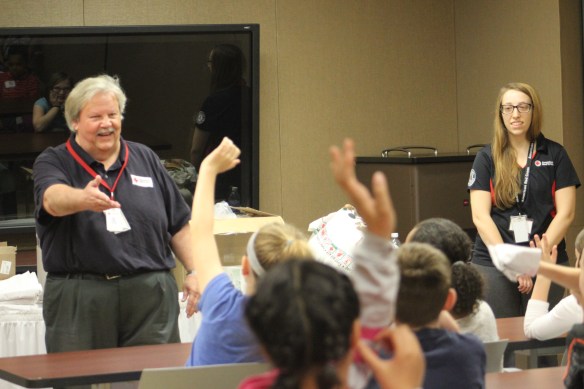
John Gareis, Regional Preparedness Manager was assisted by AmeriCorps worker Rachel Steiner at a Pillowcase Project presentation at the Cleveland VA Medical Center                                         Photo Credit: Jim McIntyre/American Red Cross

“It’s exciting to see young people in Northeast Ohio and across the country learn how to prepare themselves, their households, and their communities for emergencies and save lives by participating in The Pillowcase Project,” said John Gareis, Regional Preparedness Manager.

To date, 11 lives have been saved by four students who put into practice what they learned through the program. Last year, 9-year-old Camryn Sarnie of Ramona, Oklahoma was startled awake at 3:00 a.m. by a smoke alarm sounding in his home. The sound scared Camryn, but he recognized it and knew that it was alerting him to a fire. He knew that he had less than two minutes to escape, so he quickly woke up his parents, alerted them to the fire and instructed them to evacuate immediately. Camryn saved three lives that morning, including his own, by putting into practice what he learned just a few weeks earlier from The Pillowcase Project presentation at his school. According to Camryn’s mother, Lora, “Camryn told us all about what he learned in class after the presentation. Camryn is a true hero.”

IMG_5993

The Red Cross has engaged more than 35,000 volunteers and partnered with more than 13,000 schools, community organizations and partners to deliver this program to students across the country and at more than a dozen U.S. military stations abroad. The Walt Disney Company is the founding sponsor of the program.

Contact John Gareis at 216-431-3219 to schedule a Pillowcase Project presentation for your school, or email john.gareis@redcross.org. .  Additional information about The Pillowcase Project is available at redcross.org/pillowcase.

Keeping Fans’ Blood Pressure in Check

By Doug Bardwell – American Red Cross volunteer

It’s June again, and Cavs fans blood pressures are rising.  It could have to do with missed free throws.  It might be due to poor calls by the selectively blind referees. Or it could be due to an opponent overly adept at shooting three-point baskets from obscene distances.

In any event, it’s NBA Finals time and collectively our blood pressures are on the rise…. which is not a good thing.

IMG_1459

Hopefully, this situation will improve shortly; but high blood pressure can be caused by a number of other factors, and it’s something that definitely needs to be monitored.

Some symptoms of dangerously high blood pressure include:

  • Severe headache
  • Chest pain
  • Irregular heartbeat
  • Unusual fatigue
  • Problems with your vision
  • Throbbing in your chest, ears or neck

If you notice these symptoms, it’s wise to seek a doctor’s help quickly. Extreme blood pressure problems could cause a stroke or heart disease.

Remedies for high blood pressure (for other than NBA-induced causes) include:

  • Adopting a healthy diet
  • Regularly exercising
  • Losing weight
  • Reducing sodium in the diet
  • Cutting back on caffeine
  • Quitting smoking
  • Limiting use of alcohol
  • Reducing stress

One other thing everyone can do is to get your blood pressure checked on a regular basis.  How about every eight weeks for example?

That’s how often you can donate blood, and each time you donate, you’ll get a mini-checkup from your friendly Blood Services professional at the donation site.  Iron levels and blood pressure are always checked before you donate, so you won’t develop a problem without being alerted.dougdonating

Give yourself plenty of time to get to your donation location, as blood pressure can rise needlessly if you are stressed about being late to your appointment. Fortunately, in a case like that, sitting quietly for 10-15 minutes should bring you right back to normal levels, and your pressure can be checked a second time.

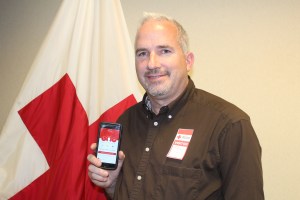
To schedule your regular eight-week appointment, log on to redcrossblood.org and pick a convenient date and location. Or, you can do it quickly from the Red Cross Blood Donor App for your Android or iOS phone.

Raising Awareness: National CPR and AED Awareness Week

By Brad Galvan, American Red Cross Volunteer

Arguably more important than National Doughnut Day or National Turkey Lovers Day (both real), comes National CPR and AED Awareness Week.

On December 13, 2007, Congress unanimously passed a resolution to set aside June 1-7 each year as National CPR and AED Awareness Week to spotlight how lives can be saved if more Americans know CPR and how to use an AED.

Icon PreparednessThe American Red Cross recognizes and celebrates this week by encouraging as many community members as possible to take get trained and acclimated to both CPR and AED utilization.  We also recognize individuals who have saved the lives of others by performing CPR and using an AED (automated external defibrillator.)  See the stories of the heroes we honored recently in Cleveland and Akron on our YouTube Channel.
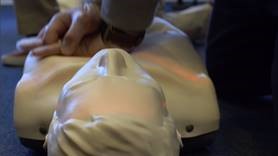
CPR and AED utilization has saved countless lives; the reason? It’s because another person remembered past training and stepped up. People helping others is the cornerstone of thriving communities.

The Red Cross has many opportunities for community members to get trained with these life-saving skills. There are countless classes in varying formats: in-person, online and simulated, to teach both adult and pediatric CPR. Visit https://www.redcross.org/take-a-class/cpr/cpr-training/cpr-classes for a listing.

BigRed Manikin (002)Those taking hands-on training will benefit from practicing skills on the new state of the art BigRed™ LightSaving Manikin. The manikin will increase students’ confidence that they can save a life in emergency situations, as it is equipped with three interrelated sets of lights that provide immediate feedback to students on how they are performing CPR. Only the proper technique will show the success of blood circulating from the heart to the brain which improves a sudden cardiac arrest victim’s chance of survival.

The free Red Cross First Aid App provides users with instant access on how to perform Hands-Only CPR and information on sudden cardiac arrest, heart attacks and other emergencies.

How are you going to step up and observe this important week?

Ready to Help as Hurricane Season Begins

By Debra Kellar, Senior Specialist, Volunteer Services

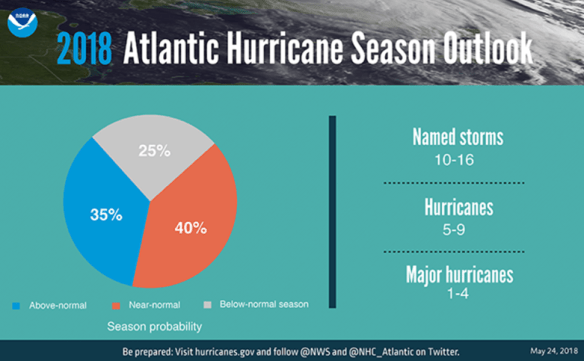
Preparations are underway along the coasts, as the 2018 hurricane season is upon us. June 1 marks the start of what forecasters anticipate being a ‘near or above-normal’ year for storms in both the Atlantic and Pacific basins.

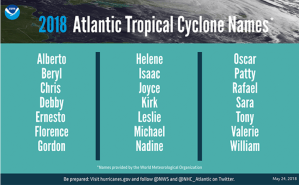
Forecasters also predict, with a 70 percent likelihood, that we will see 10 to 16 named storms in the Atlantic, of which half could be powerful enough to be classified as hurricanes. One to four storms are expected to become major hurricanes. Based on this prediction, the 2018 season is expected to be similar to last year–one that saw catastrophic impacts from Hurricanes Harvey, Irma and Maria.


hurricane graphic

Animation provided by Yiqi Shao

Anatomy of a Hurricane

The formation of a hurricane begins as warm, moist air travels around the equator, rising as it heats, creating an area of low pressure beneath. As cooler air rushes in to take its place, it, too, begins to warm and rise before subsequently cooling, causing the formation of clouds. The system grows, further perpetuating the cycle.  As the winds get faster and faster, an eye will form in the center of the storm.

Once sustained wind speeds reach 39 m.p.h., the system is considered to be a tropical storm. Upon reaching 74 m.p.h., it is reclassified as a hurricane. The Saffir Simpson wind scale is used to further categorize a hurricane, with the weakest referred to as a Category 1 hurricane and winds in excess of 157 m.p.h. considered a Category 5.

Hurricane graphic 2

Graphics provided by the NOAA NWS National Hurricane Center, and the NOAA Central Pacific Hurricane Center.

Red Cross Recovery Efforts

Last year’s Category 5 hurricanes came in quick succession, causing response and recovery efforts to pivot and reorganize to meet the needs of those impacted as additional states became affected. The American Red Cross’ ability to adeptly transition comes from its readiness planning and from the unparalleled dedication of its volunteers. Current disaster volunteers had been poised to assist the impacted coastal states, with many volunteers from Northeast Ohio deployed to staging areas pre-landfall. As the 2017 season continued, more than 100 new volunteers from Northeast Ohio became trained to provide disaster relief as part of one of the premier humanitarian organizations in the world.

Helping People in Need

hurricane graphic 3

The Red Cross Disaster Cycle Services Department is already preparing its volunteer workforce in anticipation of another active hurricane season. If you or someone you know is interested in joining the disaster team, visit our website here to begin an online application or contact our Volunteer Services Department at 216-431-3328.

This year, Facebook has teamed up with the Red Cross to make sure people are prepared for hurricane season,  which runs through November 30. In addition to volunteering, you can help by donating to support disaster relief.

Debra Kellar studied climatology and cartography, and earned a Master’s Degree in Geography at Kent State University.

Clara Barton Answers the Call to America’s Largest Flood

By Doug Bardwell, American Red Cross volunteer

Just before 3 p.m. on May 31, 1889, 14 miles west of Johnstown, Pennsylvania, a dam broke, releasing 20-million tons of water into the Conemaugh Valley. In this narrow valley, the water reached 60 feet high as it barreled toward the city at speeds of 40 m.p.h.

By the time it struck Johnstown, the 4 billion gallons of water brought with it everything in its path. Four square miles of downtown were completely obliterated by the crushing flood waters. By the time it was over, 30 acres of human bodies, homes and debris were piled 70 feet high against the stone-arched railroad bridge at the far edge of town. The pressure and amount of the water was later compared to all the water flowing over Niagara Falls in 36 minutes.

johnstown55

Photo credit: Johnstown Flood Museum

Between the force of the water and the ensuing explosions and fires that broke out, more than 2,200 people died, 1,600 homes were destroyed, and $17 million worth of damage was done (close to $500 million in today’s valuation.)

From War Relief to Disaster ReliefClara B

In Washington, D.C., Clara Barton got word of the event.  Prior to this time, she had provided relief to the Civil War soldiers, but was lobbying for the American Red Cross to provided relief for peacetime disasters as well.  Five days after the flood, Clara and five Red Cross workers arrived in Johnstown. Within days, she had assembled a team of 50 doctors, nurses and relief workers.Johnstown Flood

Setting up headquarters in the city, she immediately began organizing donations that began arriving from all around the world.  Food, clean water and supplies were passed out immediately to survivors as they tried to create shelters however they could.


“Red Cross Hotels” were opened to provide shelter for those left homeless before the winter weather set in.  The first “hotel” was so successful, five more were quickly erected.

Johnstown Flood 2

Photo credit: U. S. National Park Service

They also began building 3,000 “Oklahoma houses,” a type of prefabricated home, to aid the city in rebuilding. Furniture donations and domestic items were then organized and distributed to outfit these homes.

Clara didn’t leave the city for five straight months, only returning to Washington on October 24, 1889.  The city presented her with a number of gifts to show their lasting gratitude.  One editorialist wrote, “Too much cannot be said in praise of this lady…To her timely and heroic work, more than that of any other human being, are the people of the Conemaugh Valley indebted.”

Today if you visit the Johnstown Flood Museum, you’ll see a section devoted exclusively to Clara Barton and the Red Cross’ success in helping restore the town, along with some of her original papers and one of the first Red Cross blankets to be distributed.

Johnstown Flood 3.docx

Photo credit: Doug Bardwell/American Red Cross

Based largely on the success of her mission to aid the Johnstown residents, the American Red Cross received its Congressional Charter 10 years later, in 1900.

Today you can continue the legacy of Barton and volunteer to help with the next big disaster to strike this country.  Volunteer today at https://neoredcross.org/volunteer/.

Access the ProVia Employee Red Cross Volunteer Application here.  

Making a Difference

KeyBank Invites Red Cross to Take Part in Annual Day of Service

Photo credit: Jim McIntyre/American Red Cross

“It’s important to give back.” David Percy, an employee at KeyBank was standing on the porch of a house in Cleveland’s Glenville neighborhood when he explained why he takes part every year in KeyBank’s Neighbors Make the Difference Day. More than 100 KeyBank workers helped residents with landscaping, painting projects, and other home and yard maintenance on Wednesday, May 23. It was the 28th year for KeyBank’s urban beautification effort.

And this year, the Red Cross was invited to participate, by installing smoke alarms and providing home fire safety information to residents on E. 110th and E. 111th Streets.  KeyBank employees accompanied Red Cross workers who installed 41 alarms, making 15 homes safer.

“This is huge,” said E. 111th Street resident Marion Rolling, after KeyBank workers helped install three smoke alarms in his home. “I don’t know if the alarms were even working.”

IMG_5961

Glenville resident Marion Rolling and KeyBank employee Caitlyn Webster

When he was informed that the batteries had been removed from his old alarms, he said, “Well I guess they weren’t!”

The Red Cross performs home safety checks and installs free smoke alarms in homes where they are needed throughout Northeast Ohio. Visit soundthealarm.org/neo to request an alarm.

East Cleveland KeyBank Branch Manager Caitlyn Webster was especially concerned about the homes she entered where children lived.  The mother of two said, “It’s scary to walk into a home with little kids and no smoke alarms.”

“It shows good corporate citizenship,” said Robert Neumann, a Payments Advisor at KeyBank. He said this was the sixth year he has participated in Neighbors Make the Difference Day. “It makes you proud of where you work.”

You need not wait for a special day to volunteer.  The need for qualified volunteers at the Red Cross is constant.  Visit redcross.org/neo to learn more.

You can see more photos from Neighbors Make the Difference Day here.

Veterans Showered with Baby Gifts

The Tiffany Circle, VA Partner for Baby Shower 

IMG_5922

They faced the prospects of enemy fire, foxholes and being far from home while serving in our nation’s military.   And now they are facing one of the most daunting challenges in life…MOTHERHOOD.

14 women veterans from Northeast Ohio came together on Saturday, May 19, 2018 after being invited to a baby shower for female veterans served by the Northeast Ohio Veterans Affairs Healthcare System.  The shower was supported by the Tiffany Circle, a community of women leaders and philanthropists who advance the Red Cross mission through a focused investment of time, talent and treasure by engaging women locally, nationally, and internationally.

“It was touching for me, as a Tiffany Circle and Greater Cleveland Board member, to honor the women veterans who served our country,” said Donna Rae Smith, long time Red Cross and military supporter. “These are special women who have the courage and disciple to be both mothers and members of our military.”

The mommies-to-be were treated to lunch and a basket full of baby supplies.  Many were accompanied by family members, including young children.  Visit our photo album on Flickr.

Photo credit:  Jessica Tischler/American Red Cross

“The Northeast Ohio VA Healthcare System is grateful to the Greater Cleveland Red Cross Chapter and its Tiffany Circle women for their extraordinary generosity and compassion in hosting a baby shower for more than a dozen of our female veterans,” said Sue Fuehrer, Director of the Northeast Ohio VA Healthcare System.  “These women served with excellence and honor and providing a laundry basket full of goodies for them and their newborn was a wonderful way to thank them for their service to our country.”

The Red Cross was founded by Clara Barton more than 130 years ago, after she nursed, comforted and cooked for wounded soldiers during the Civil War, earning the nickname the “Angel of the Battlefield.”   Today, the Red Cross continues to serve our military men and women, veterans and their families through Service to the Armed Forces (SAF.)  There are many opportunities for volunteers to serve as well.  Visit redcross.org/neo for information about Service to the Armed Forces and volunteering.


Stay Safe This Summer

The Memorial Day holiday weekend is the unofficial start of summer when all of us will be enjoying the outdoors and sunshine. The American Red Cross wants everyone to have fun and offers 20 things you can do to be safe all summer long.

“Summer is finally on the way and many of us will travel, grill delicious food and cool off in the pool or at the beach,” said Mike Parks, Chief Executive Officer for the Red Cross of Northeast Ohio. “We want everyone to enjoy the summer and be safe at the same time, so we are offering these 20 safety tips people should follow.”

DRIVING SAFETY

  1. Be well rested and alert, use seat belts, observe speed limits and follow the rules of the road. Clean your headlights and turn them on as dusk approaches or in inclement weather.
  2. Don’t drink and drive. Have a designated driver available.
  1. Give your full attention to the road. Avoid distractions such as cell phones. 
  2. Use caution in work zones. There are lots of construction projects underway on the highways.
  3. Don’t follow other vehicles too closely.

WATER SAFETY

man wearing blue shorts performing back flip over body of water

Photo by Oliver Sjöström on Pexels.com

  1. Ensure that everyone in the family becomes water competent. That is, learn to swim well, know your limitations and how to recognize and avoid hazards, and understand how to help prevent and respond to emergencies around water.
  2. Adults should actively supervise children and stay within arm’s reach of young children and newer swimmers. Kids should follow the rules.
  3. Fence your pool in with four-sided fencing that is at least four-feet in height and use self-closing, self-latching gates.
  4. Wear your U.S. Coast Guard-approved life jacket always when on a boat and if in a situation beyond your skill level.
  5. Swim as a pair near a lifeguard’s chair everyone, including experienced swimmers, should swim with a buddy in areas protected by lifeguards. If in a location with no lifeguards, such as a residential pool, designate a “Water Watcher” to keep a close eye and constant attention on children in and around the water.

BEACH SAFETY

group of people playing on the beach

Photo by Archie Binamira on Pexels.com

  1. If you plan to swim in the ocean, a lake or river, be aware that swimming in these environments is different than swimming in a pool. Be sure you have the skills for these environments. 
  2. Swim only at a beach with a lifeguard, within the designated swimming area. Obey all instructions and orders from lifeguards and ask them about local conditions.
  3. Make sure you swim sober and that you always swim with a buddy. Know your limitations and make sure you have enough energy to swim back to shore.
  4. Protect your neck – don’t dive headfirst. Walk carefully into open waters. Watch out for and avoid aquatic life.
  5. If you are caught in a rip current, try not to panic. Signal to those on shore that you need assistance. Swim parallel to the shore until you are out of the current. Once you are free, swim toward shore. If you can’t swim to the shore, float or tread water until you are free of the rip current and then head toward shore.

 GRILLING SAFETY

charcoal grill with sausage

Photo by Skitterphoto on Pexels.com

  1. Always supervise a barbecue grill when in use. Don’t add charcoal starter fluid when coals have already been ignited.
  2. Never grill indoors – not in your house, camper, tent or any enclosed area.
  3. Make sure everyone, including pets, stays away from the grill.
  4. Keep the grill out in the open, away from the house, deck, tree branches, or anything that could catch fire.
  5. Use the long-handled tools especially made for cooking on the grill to keep the chef safe.

apps

DOWNLOAD RED CROSS APPS The Red Cross app “Emergency” can help keep you and your loved ones safe by putting vital information in your hand for more than 35 different severe weather and emergency alerts. The Red Cross Swim App promotes water safety education and helps parents and caregivers of young people learning how to swim. The Red Cross First Aid App puts instant access to information on handling the most common first aid emergencies at your fingertips. Download these apps for free by searching for ‘American Red Cross’ in your app store or at redcross.org/apps. Learn First Aid and CPR/AED skills (redcross.org/takeaclass) so you can help save a life.

Mike’s Memorial Day Message

By Mike Parks, RADM, U. S. Coast Guard (Ret.)
Chief Executive Officer, American Red Cross, Northeast Ohio Region

IMG_4879

Northeast Ohio American Red Cross Family:  This weekend we will commemorate Memorial Day—the last official observance during Military Appreciation Month.  Six days ago we observed Armed Forces Day (May 19th) when we recognized all those who have, or are serving, in our Armed Forces (Army, Navy, Air Force, Marines, and Coast Guard).   This day of commemoration began in 1949 when President Truman proclaimed it would be observed on the third Saturday in May.

We also recognize military spouses’ incredible impact to our lives and communities during this month on Military Spouse Appreciation Day which is observed on the Friday in May right before Mother’s Day ever since President Reagan proclaimed it so in 1984.

As we prepare to recognize Memorial Day, which is often associated with the unofficial start of summer (especially for boaters and anglers on the shores of Lake Erie), we should remember that Memorial Day honors those almost 1.2 million servicemen and women who paid the ultimate sacrifice serving our great nation.  The last Monday in May is set aside for our nation to Honor, Remember, and Never Forget the fallen and their sacrifice.

So as we put burgers on the BBQ in our backyards this weekend, take in some baseball, basketball, or boating, let us not forget why we have this long weekend.  We’re fortunate to live in a part of the country where small town Memorial Day parades are everywhere—please take one in—stand and place your hand over your heart when “Old Glory” passes by—thank a veteran for their service—simply put, remember and honor the sacrifice that has paid, and continues to pay, for our freedom!  As members of the American Red Cross—we’re privileged to serve in the world’s premier humanitarian organization that has a long history of serving our Armed Forces of this world’s greatest nation—an organization that has it’s very roots in the battlefield.  Thank you for what you do and for Honoring, Remembering, and Never Forgetting!  God bless the United States of America.

Yours in service,
Mike Parks.