A Month of Preparedness, sneak peek into September at the Red Cross of Northeast Ohio

One piece of the mission of the American Red Cross is to prevent human suffering in the face of emergencies. The simplest way to do that is to help individuals and families learn how to be prepared for the disasters that happen in our communities. When a disaster strikes, because it can and will happen, everyone will have the tools and knowledge to respond accordingly.

The month of September is National Preparedness Month. For the Red Cross and many of our partner organizations, September is the perfect opportunity to voice the power of being prepared in our homes and in our communities.

There are so many simple, quick ways to prepare for an emergency situation.

  1. Check your smoke detectors once a month and change the battery at least once a year.
  2. If you don’t have smoke detectors, install them. One in every bedroom, one outside of sleeping areas and one on every level of your home. (NOTE: carbon monoxide detectors and smoke detectors are not the same thing.)
  3. Make a Fire Escape Plan and teach it to every member of the household.
  4. Practice your plan twice a year.
  5. Know what emergencies can affect your area: Flooding, Tornadoes, etc.
  6. Create a 72-hour Emergency Kit filled with necessities to keep your family safe and sound for 3 days.
  7. Take a first aid and CPR course.
  8. Download the FREE Red Cross Apps through iOS or Android app marketplaces.
  9. Make your neighbors part of your emergency plan (and you become a part of theirs), especially if they are older adults or have young children in the home.

All September long, our blog will be dedicated to details ways that you can get your family prepared, so be sure to subscribe or check back often.

If you are regular reader of this blog or just happened here through Google, please, share this link with your friends and colleagues. It is vitally important that we help ourselves and each other before an emergency situation happens.

The power of being prepared (at any age)…

My boys are survivalists at heart.

When they were little, each carried around a bag full of cherished things:   “Puppy” the stuffed dog, a tape measure from Papa, a wallet with a few bucks in it, a note pad, a toy car, a plastic hammer, a blanket.  Today they still carry around bags, though now it is a camel pack filled with a pocket knife, wallet, gloves, bug spray, bandana, flashlight, and first aid kit.  As teenagers they are more inclined to be prepared for an emergency.

This is not a scientific fact, but, personally, I believe that people want to be prepared. Stuffing a bag full of essentials is one way to do that.  Heck, I have a purse stuffed full with essentials, myself! This personal belief is what made me fall in love with the American Red Cross Pillowcase Project sponsored by Disney!

A Girl Scout troop colors preparedness kits during a Red Cross Pillowcase Project session.

A Girl Scout troop colors preparedness kits during a Red Cross Pillowcase Project session.

The pillowcase project is an emergency preparedness exercise that teaches children grades 3-5 about weather related emergencies, coping mechanisms, and provides them with a “bag” in which to stuff all their essentials.  Instead of an ordinary bag it is a personally decorated, canvas pillowcase. I was very excited about this project, not only as a Red Crosser, but also as a parent.  I signed up right away to be a presenter and am so happy that I did.

My first session was with a group of Girl Scouts from Wooster, Ohio.  To my surprise they were very well-versed in tornado safety.  They already knew the difference between a tornado watch and a warning.  They knew where to go and what to do.  They were very smart cookies (no pun intended)!  However, when we talked about coping mechanisms, none of them really knew what that meant. As a presenter, I was able to introduce them to new ways to deal with fear and anxiety in just a few steps through coping mechanisms like breathing with color or singing their favorite song.  These mechanisms can help on a day-to-day basis and in times of emergency.

When the time came to pass out the pillowcases, we talked about what they would put in their pillowcase.  I asked them to think about the items that they would need in an emergency.  They began to list the items like flashlight, band-aids, batteries, phone charger before they mentioned the important stuff: stuffed animals, pictures of family, and special toys.

It is very important to be prepared for an emergency physically – with all the emergency equipment – but it is equally as important prepared mentally, emotionally and spiritually. Hence the need for a stuffed animal and family photos!

This project is valuable in so many ways.  It is a fun and interactive teaching tool and the take a way is a tangible, touchable, stuffable pillowcase.  My day-to-day tasks don’t usually put me in contact with children, but this project has allowed me to reach out to the children in our community as future Red Crossers, future leaders, volunteers, and emergency personal.  I feel priveledged to be a Pillowcase Presenter.

Katie Myers-Griffith

Executive Director, American Red Cross, Ashland & Wayne Counties, Ohio.


Heading out to the movies this weekend?

Wildfire is a phenomena that we don’t really worry about happening here in Northeast Ohio.

However, if you are heading out to see Disney’s new movie, Planes Fire and Rescue, then you may want to arm yourself for the conversation that could follow.

In the movie, Dusty Crophopper (star of the first Planes movie) travels to Piston Peak National Park to train as a firefighter. While there he encounters and fights several wildfires.

Careless use of fire in heavily wooded areas such as a campsite at Piston Peak, combined with drought or dry conditions, dramatically increase the chance of a wildfire. Fire can spread quickly.

A Red Cross Volunteer observes first responders at a Wildfire.

When a wildfire rages, every second counts.

While first responders, like Dusty, control the fire through aerial and ground maneuvering, the American Red Cross establishes shelters and provides food and water to those who were forced to flee their homes. Shelters provide a safe place to stay and volunteers offer support and a caring shoulder. Once it is safe to return to a community, the Red Cross provides trash bags, masks and heavy work gloves to the people who start to shift through the ashes.

The Red Cross may also provide refreshments to the first responders who fight the blazes. (Cab, a cola depicted in the movie, anyone?)

Preparedness is paramount to those who live in areas susceptible to wildfire. That is why the Red Cross developed Wildfire Safety Tips and the Wildfire App.

In our communities, the Red Cross is more likely to respond to a home fire. In Northeast Ohio, we respond to an average 2.5 home fires a night. Some of the steps you can take to prevent this is your own home include:

  • Keep anything that can catch fire—like pot holders, towels, plastic and clothing— away from the stove.
  • Never smoke in bed.
  • Talk to your children regularly about the dangers of fire, matches and lighters and keep them out of reach.
  • Install smoke alarms on every level of your home, inside bedrooms and outside sleeping areas.
  • Teach your children what smoke alarms sound like and what to do when they hear one.
  • Once a month check whether each alarm in the home is working properly by pushing the test button.
  • Replace batteries in smoke alarms at least once a year. Immediately install a new battery if an alarm chirps, warning the battery is low.
  • Carbon monoxide alarms are not substitutes for smoke alarms. Know the difference between the sound of smoke alarms and carbon monoxide alarms.
  • Ensure that all household members know two ways to escape from every room of your home.
  • Make sure everyone knows where to meet outside in case of fire.
  • Practice escaping from your home at least twice a year and at different times of the day. Practice waking up to smoke alarms, low crawling and meeting outside. Make sure everyone knows how to call 9-1-1.
  • Teach household members to STOP, DROP and ROLL if their clothes should catch on fire.

For more information on home fire prevention and safety, visit our website.

Some of the scenes in Planes Fire and Rescue may be a little worrisome to young viewers. You can assure them that there plenty of specially trained first responders ready to respond to the emergency. And organizations, like the Red Cross, are ready to respond to the people who experience a wildfire or a home fire.

Basement Flooded? Follow these four safety steps.

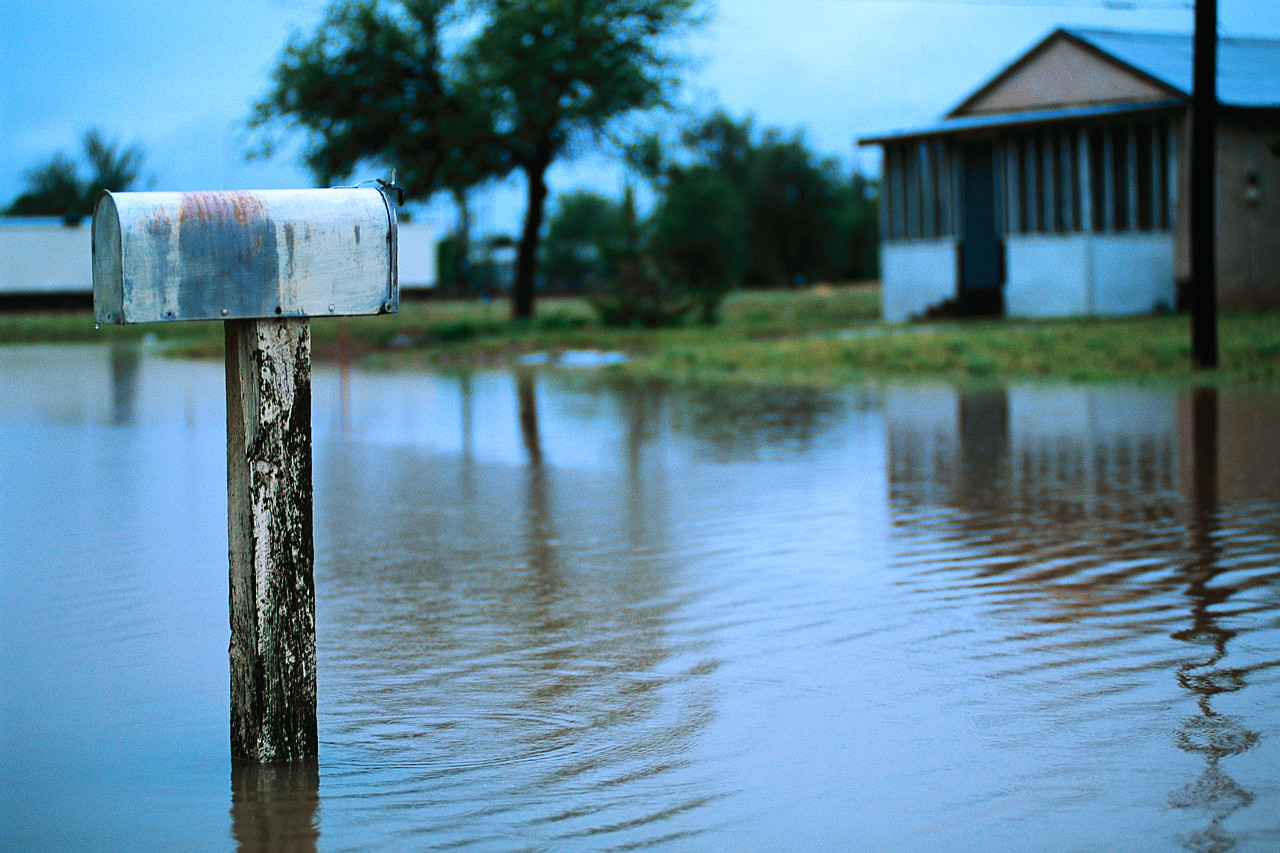
Mailbox in Flood WatersStep #1: Stay SAFE!

Don’t risk serious injury if your basement floods. A flooded basement can be a serious health and safety risk. If your basement floods, follow these rules to make sure your family stays safe.

  •  Avoid venturing down into the basement if possible. In a severe basement flooding situation (water covering the basement floor to a depth of an inch or more), it’s best to stay out of the basement until the water is pumped out. Standing water in your basement can contain harmful bacteria.
  • Never touch electrical wiring or fixtures. If you must venture down into a flooded basement, wear waterproof rubber boots. Avoid touching or using electrical devices (except for a battery-powered flashlight) because this puts you at risk of electrical shock or electrocution.
  • Have standing water pumped out as soon as possible.


Step #2: Determine the cause of your flooded basement.

Sometimes the source of unwanted water is obvious –as with a burst water line or sewer backup. In other cases, water may be leaking into your basement for different reasons. If it is not obvious what caused your flooding, contact a licensed professional for an inspection.

Step #3. Remove water-damaged items and begin cleanup.

Are there wood-framed walls finished with drywall in your basement? If so, the lower section of these walls is likely to retain moisture and attract mold –even without a major basement flood. Take precautions for safety, but begin clean up as soon as possible. Eliminate the source of the flooding first, then clean up and toss out anything that is contaminated, using bleach and similar household cleaners. Bleach is the best cleaning product to kill mold, mildew and bacteria.

Step #4. Mitigate future flooding.

There are a number of ways you can mitigate future flooding loss by installing preventive equipment and valves, raising the height of critical utilities and appliances off the floor or out of your basement entirely, and simply keeping gutters clean. Make sure the ground around your home slopes away from your foundation. Raising the electrical outlets in your basement can also alleviate electrical shorts and injury due to shock. Acquire flood insurance.

For more information, download this helpful check list and information sheet: Basement Flooding – Safety and Clean-up Checklist

Is there still wicked weather raging over your house? Learn what to do before, during and after a flood. Download the Flood Safety Checklist, check out the Red Cross Flood App (available for iOS and Android) or visit the American Red Cross Flood Safety page.

Cleveland State Intern, Mary Malone shares her Red Cross story

As a senior at Cleveland State University pursuing a bachelors of Social Work, I began an internship with the American Red Cross, in the Emergency Services department.

After a fire, the Red Cross assists the family in immediate and urgent needs. As a student intern I am learning how to participate in a social services agency setting by working directly with clients, other caseworkers, volunteers, and various other staff positions. I look to each person at the Red Cross as a “teacher” and someone from whom I can learn valuable lessons and techniques.

A typical day for me at the Red Cross includes following up with clients after they have experienced a disaster. The most prevalent of emergency situations that I have encountered, during my time, are single-family house fires. The caseworkers at the Red Cross and I ensure that the client’s direct needs are being met. If the Red Cross cannot provide it directly, there are countless referrals to other community organizations. I spend a lot of time on the phone talking with clients, sometimes it is a short call and sometimes the client wants to have someone to talk to and express their fears, worries, and sometimes even joys. I use my ability to communicate with others when they have just experienced a crisis, by validating their words and listening to what it is that they are saying. Other times I meet with clients when they need to come in to the Red Cross for a meeting with a caseworker. Being able to help people in such a dire time of need, knowing that I have many tools in my toolbox to assist them and let them know that they are not alone, is so rewarding.

As part of my internship, I have been able to go out and witness the scene of a disaster. I went to a house that had been burnt very badly and the emotions of clients as they were standing outside, were very raw. Having never been in a situation quite like this I was not sure how I would feel, or how I should act. I learned a lot by watching my Red Cross supervisor communicate with empathy, understanding, and patience. Even though her home was very badly damaged, the client was most concerned for her cat’s well-being. As we left various neighbors, family members and friends came to her and lavish her with hugs, and envelopes of money to help financially. Even in a situation that is inconceivably horrible, the strengths within this one client’s community gives me hope of a full recovery and resiliency.

After semesters of studying books and articles, participating in mock interventions, and writing papers in preparation for my future as a Social Work practitioner, my work with the Red Cross has reaffirmed my passion for social work.