
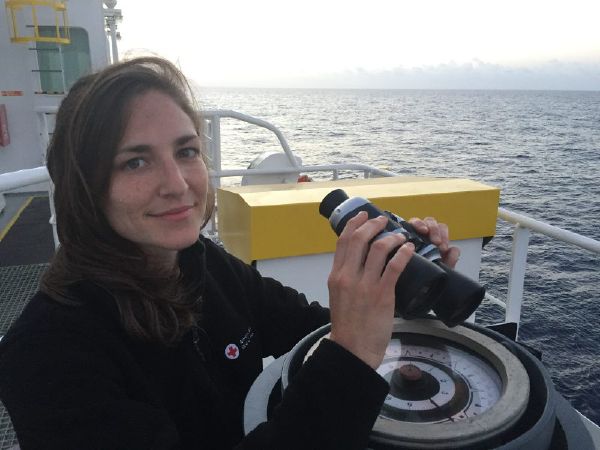
Jenelle Eli stands aboard the Responder rescue vessel in the Mediterranean Sea, some 13 nautical miles off the Libyan Coast. Crew aboard the ship wake up at 4:30am to scan the horizon with radar and binoculars for migrants in danger of drowning. Once the crew spots and confirms a wooden boat or rubber raft with migrants in trouble, they jump into action. Rescuers from Migrant Offshore Aid Station (MOAS) throw life jackets to the passengers, keep them calm, and pull them aboard the Responder. As soon as they board, a Red Cross Red Crescent doctor does a quick scan for medical emergencies. It takes 24-72 hours to reach Sicily from where people are rescued, so during that time, the Red Cross Red Crescent provides health care, food, water, blankets, and dry clothes. The teams also provide childcare and emotional support to people many of whom just survived one of the most traumatic experiences of their lives.
Migrants leave their homes in search of safety and a better life, but find themselves in overcrowded rafts and dinghies without sufficient fuel, food, water, or naviagation equipment. More than 10,000 people have died trying to make the dangerous journey across the Mediterranean Sea since 2014. In an effort to prevent these deaths, the Italian Red Cross and International Federation Red Cross and Red Crescent Societies are funding and working on the Phoenix and Responder rescue vessels alongside MOAS. The American Red Cross has contributed more than $700,000 towards addressing the migration crisis in Europe.
 NOHredcross
